WeRadiate
WeRadiate
Re-Designing the Dashboard as an insight-led management tool
Re-Designing the Dashboard as an insight-led management tool
SaaS
SaaS
SaaS
Web Dashboard
Web Dashboard
Web Dashboard
Core Features
Core Features
Core Features
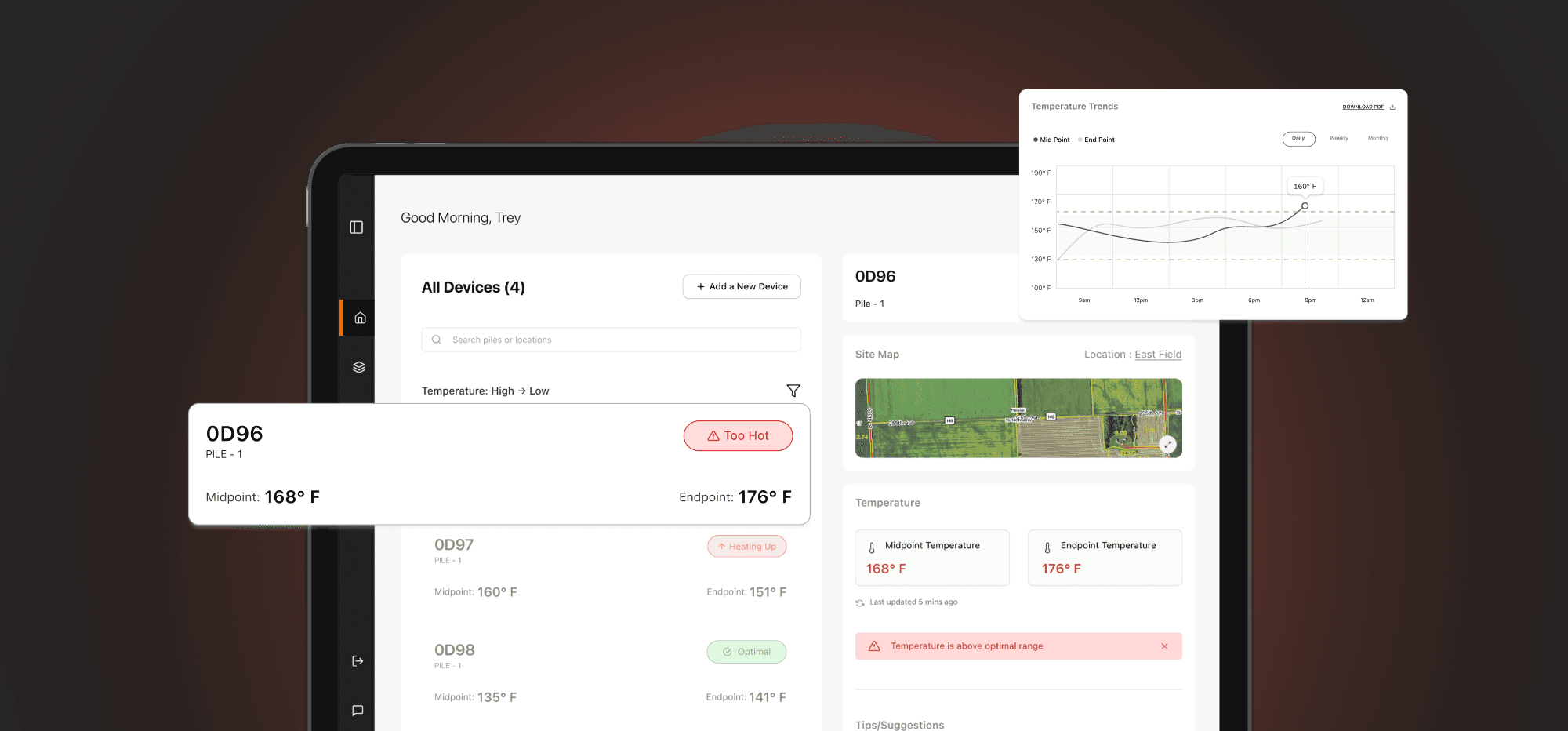
Overview
Overview
My Role
Re-designing the dashboard to help our users access information faster and act on insights.
Team
1 Founders, Analyst, 2 Eng
Duration
3 months
Overview
My Role
Re-designing the dashboard to help our users access information faster and act on insights.
Team
1 Founders, Analyst, 2 Eng
1 Founders, Analyst, 2 Eng
Duration
3 months
3 months
IMPACT
IMPACT
IMPACT
Increased User Efficiency and Boost in WeRadiate's Clientele
Increased User Efficiency and Boost in WeRadiate's Clientele
+40%
+40%
Increase in Users' Operational Efficiency
Increase in Users' Operational Efficiency
2x
2x
Increase in the Number
of Clients
Increase in the Number
of Clients
+30%
+30%
Increase in the Farmer's Compost Quality
Increase in the Farmer's Compost Quality
CONTEXT
CONTEXT
WeRadiate sensors provide soil health data to industrial composting facilities
across North America. Their core product is a Dashboard.
WeRadiate sensors provide soil health data to industrial composting facilities
across North America. Their core product is a Dashboard.
WeRadiate sensors provide soil health data to industrial composting facilities across North America. Their core product is a Dashboard.
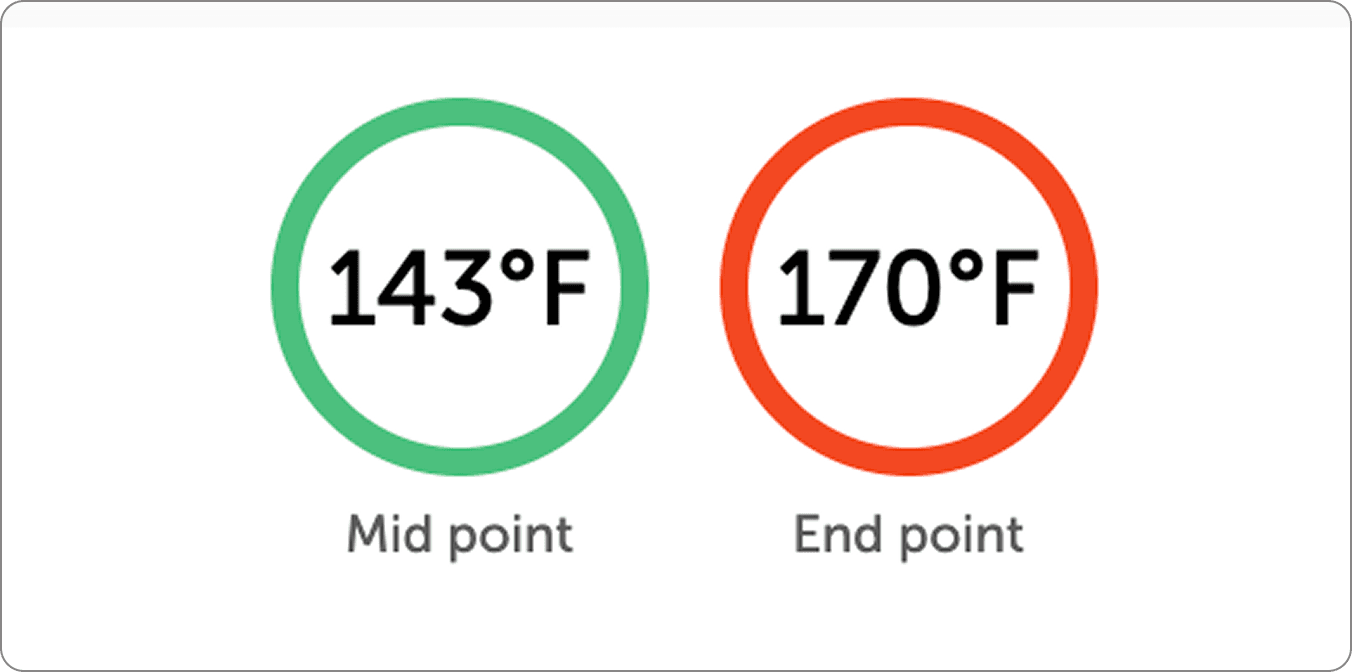
Helps composting facilities save operational costs upto 31%
Helps composting facilities save operational costs upto 31%
Farmers are able to sell the end product - Fertilizers - at 40% higher price points
Farmers are able to sell the end product - Fertilizers - at 40% higher price points
PROBLEM WITH THE EXISTING DASHBOARD
PROBLEM WITH THE EXISTING DASHBOARD
When I joined, the dashboard existed to display raw sensor data
Unclear Visuals
Unclear Visuals
Unclear Visuals
Lack of Guidance
Lack of Guidance
Lack of Guidance
No remote monitoring
No remote monitoring
No remote monitoring
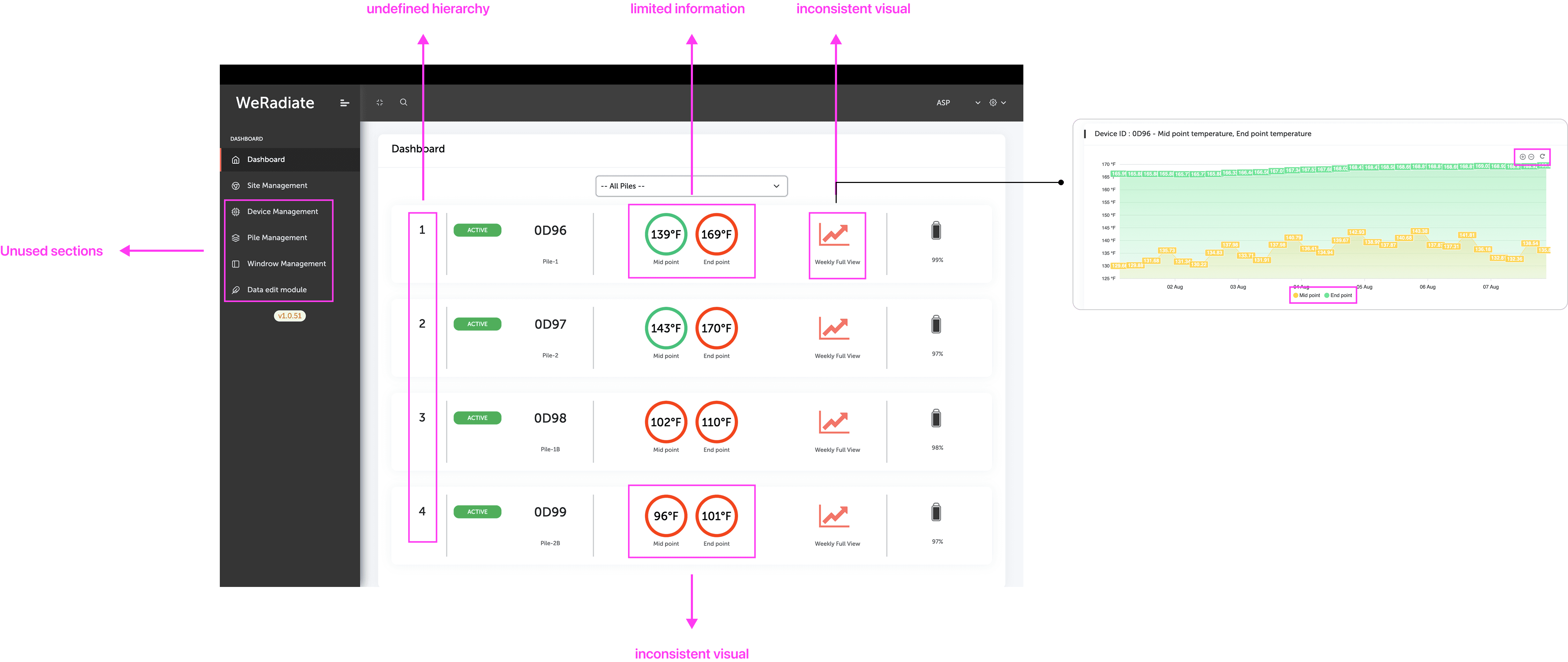
Resulting in 20% drop in compost quality and operational efficiency
Resulting in 20% drop in compost quality and operational efficiency
OPPORTUNITY AREA
OPPORTUNITY AREA
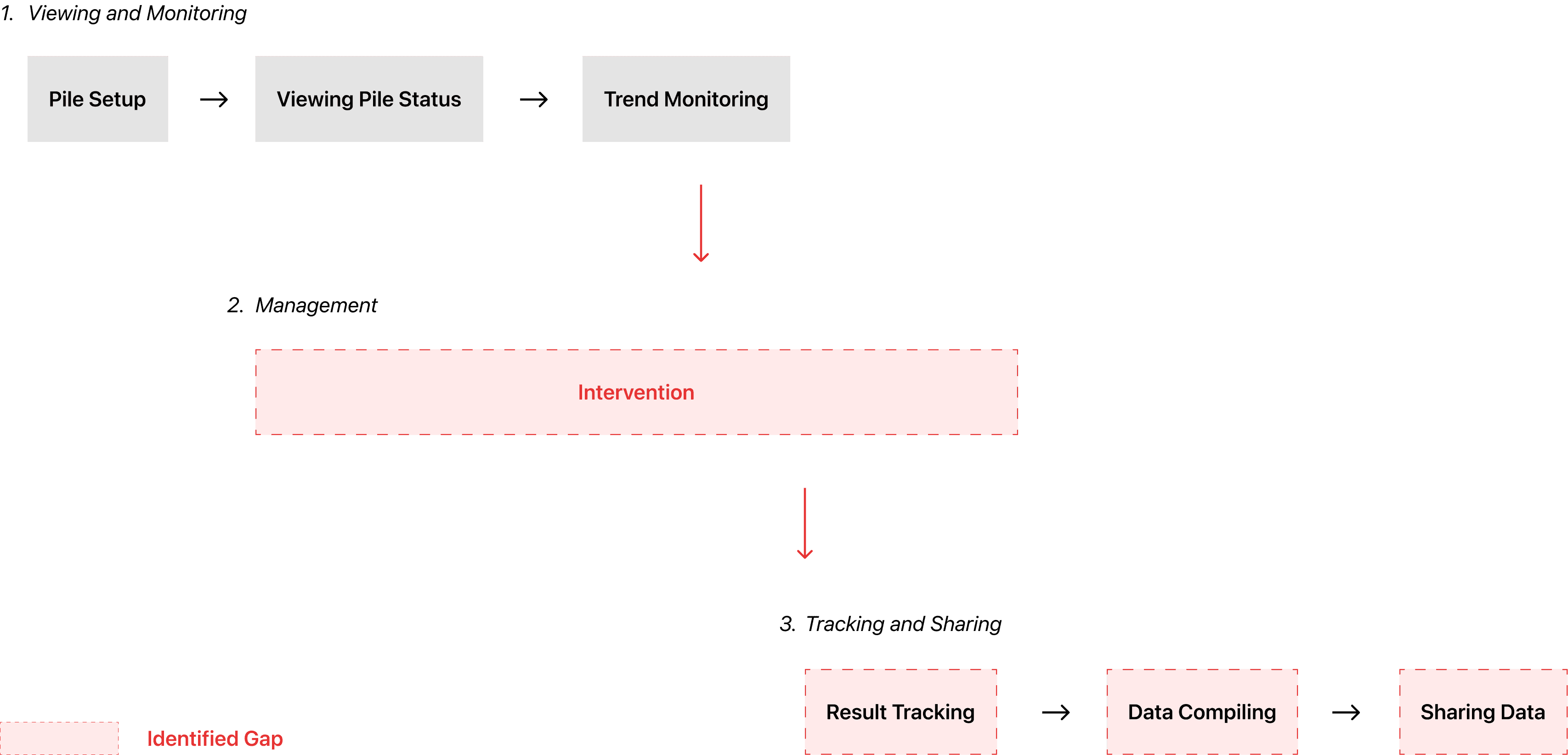
Identifying the bottleneck in the user flow - to align the dashboard to the user's mental modal
Identifying the bottleneck in the user flow - to align the dashboard to the user's mental modal
User Task Flow
User Task Flow
Post Research with Client : Big Re-Use
Post Research with Client : Big Re-Use
THE CHALLENGE
THE CHALLENGE
THE CHALLENGE
Reframing the dashboard from a passive data collection tool into an insight-driven management platform
Reframing the dashboard from a passive data collection tool into an insight-driven management platform
Reduce the gap between knowing compost conditions and taking the right action at the right time
Reduce the gap between knowing compost conditions and taking the right action at the right time
THE OUTCOME
THE OUTCOME
THE OUTCOME
Splitting the Screen
Splitting the Screen
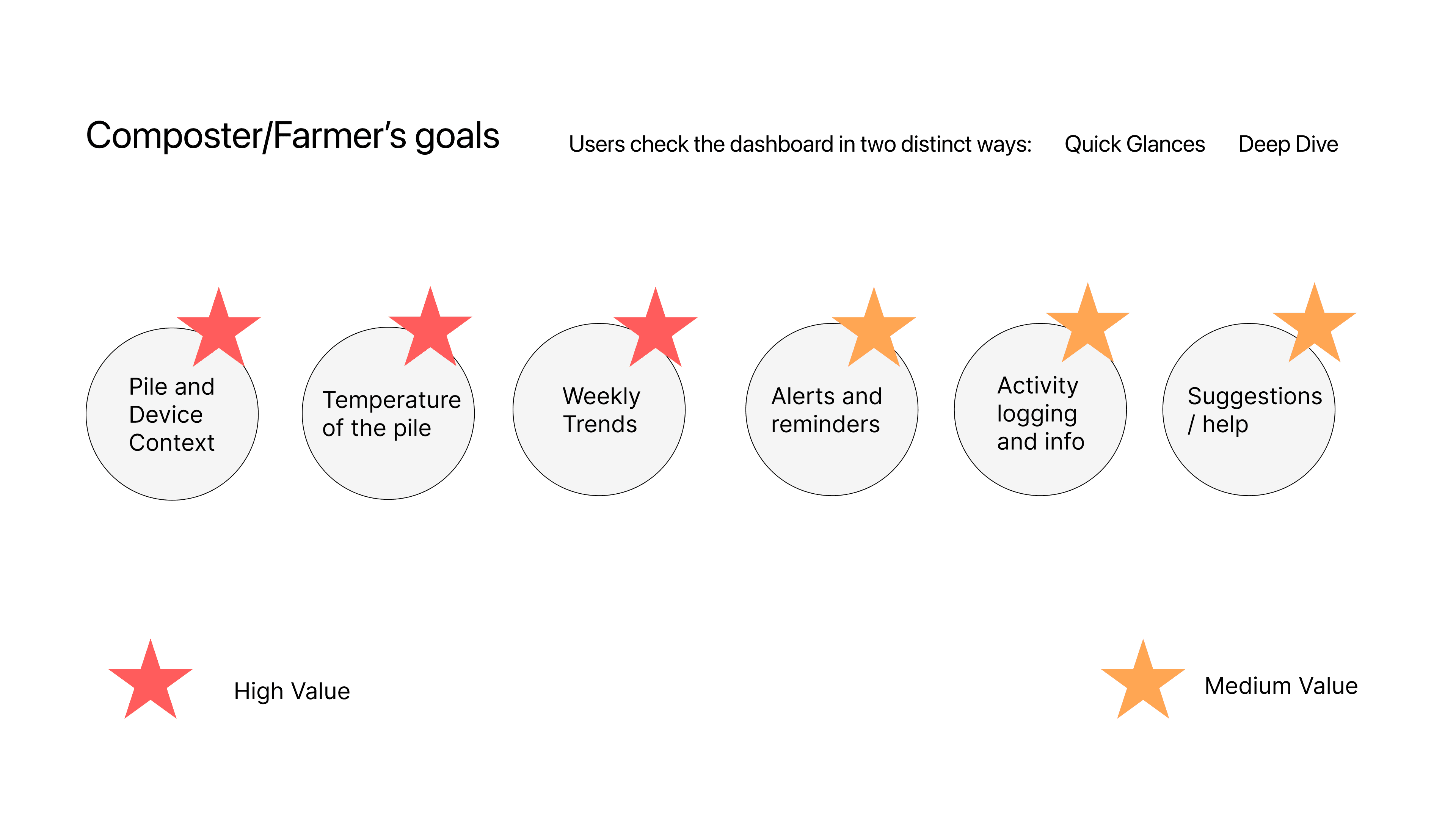
Designing for the two ways our users naturally viewed data - quick glances and deep dives.
Designing for the two ways our users naturally viewed data - quick glances and deep dives.

LEFT
→ Immediate insights
→ Overview
→ Summary
LEFT
→ Immediate insights
→ Overview
→ Summary
RIGHT
→ Guidance
→ Actionable Tips
→ Contextual Detail
RIGHT
→ Guidance
→ Actionable Tips
→ Contextual Detail
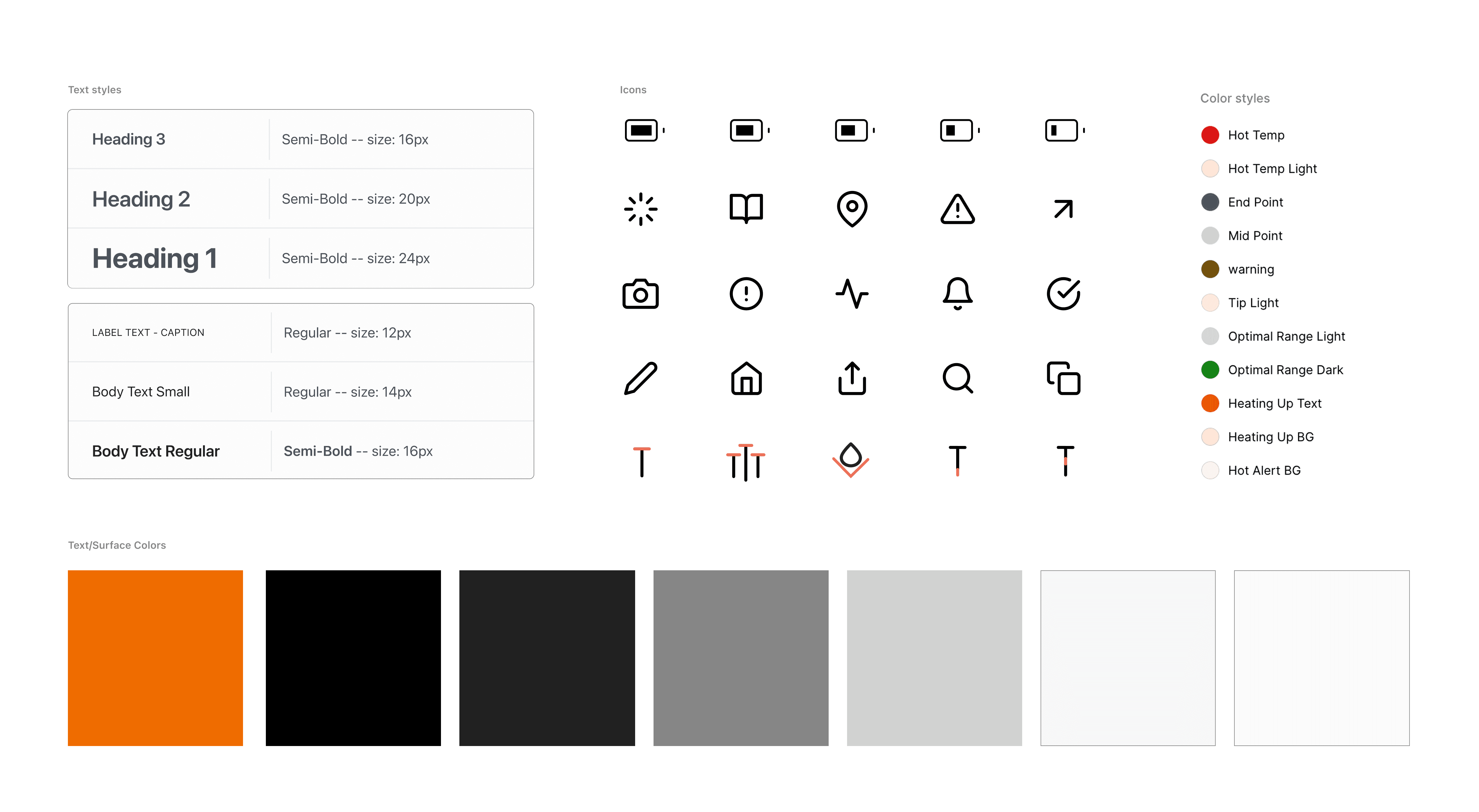
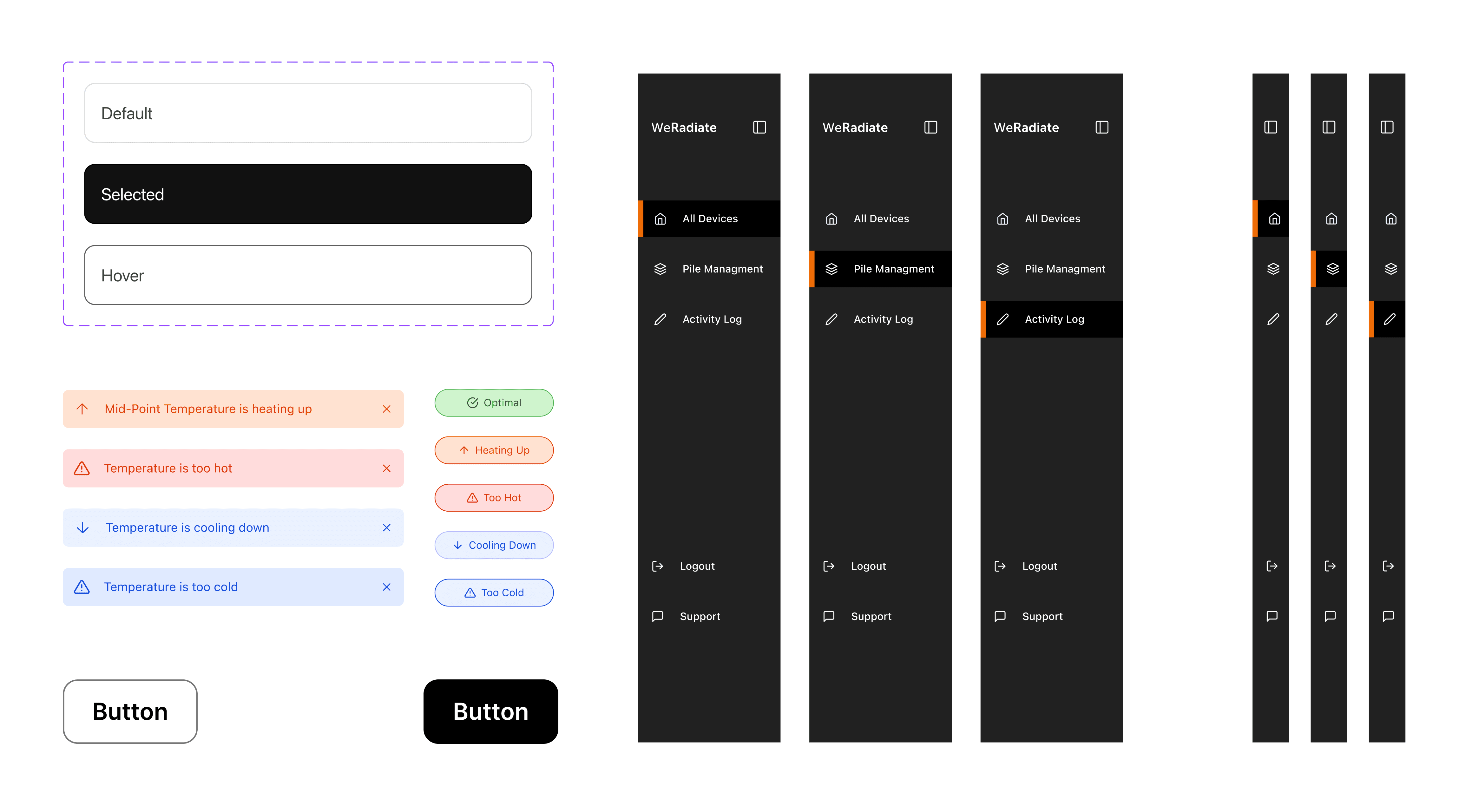
DESIGN SYSTEM
DESIGN SYSTEM
Building a design system for clear documentation and establishing a shared language
Building a design system for clear documentation and establishing a shared language
BUILDING BLOCKS
BUILDING BLOCKS
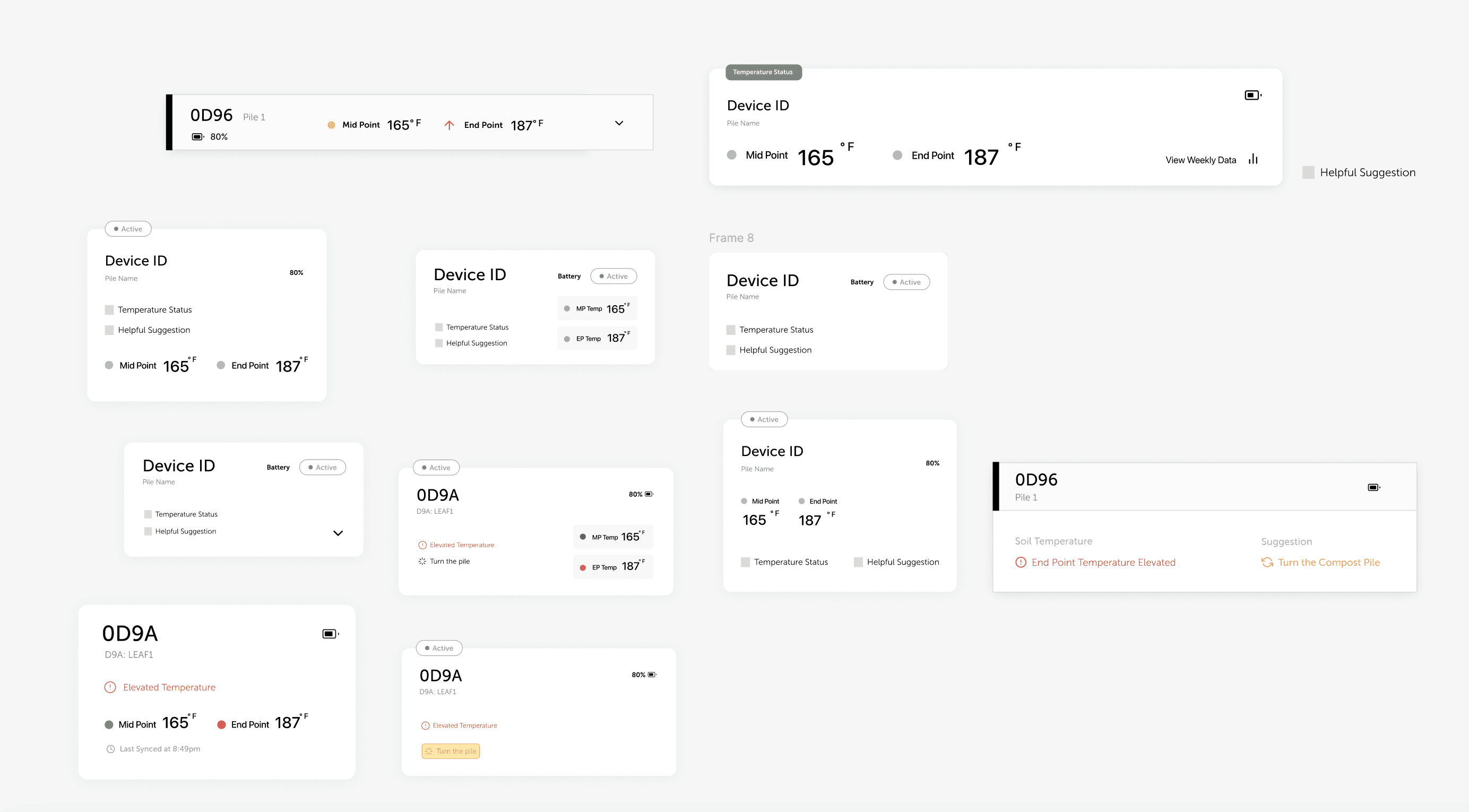
A defined card structure
A defined card structure
Helping users clearly understand what required urgent attention
Helping users clearly understand what required urgent attention
Narrowing down to 4 important factors
Device ID
Pile Number
Dual Temperature Values
Temperature Status
Narrowing down to 4 important factors
Device ID
Pile Number
Dual Temperature Values
Temperature Status
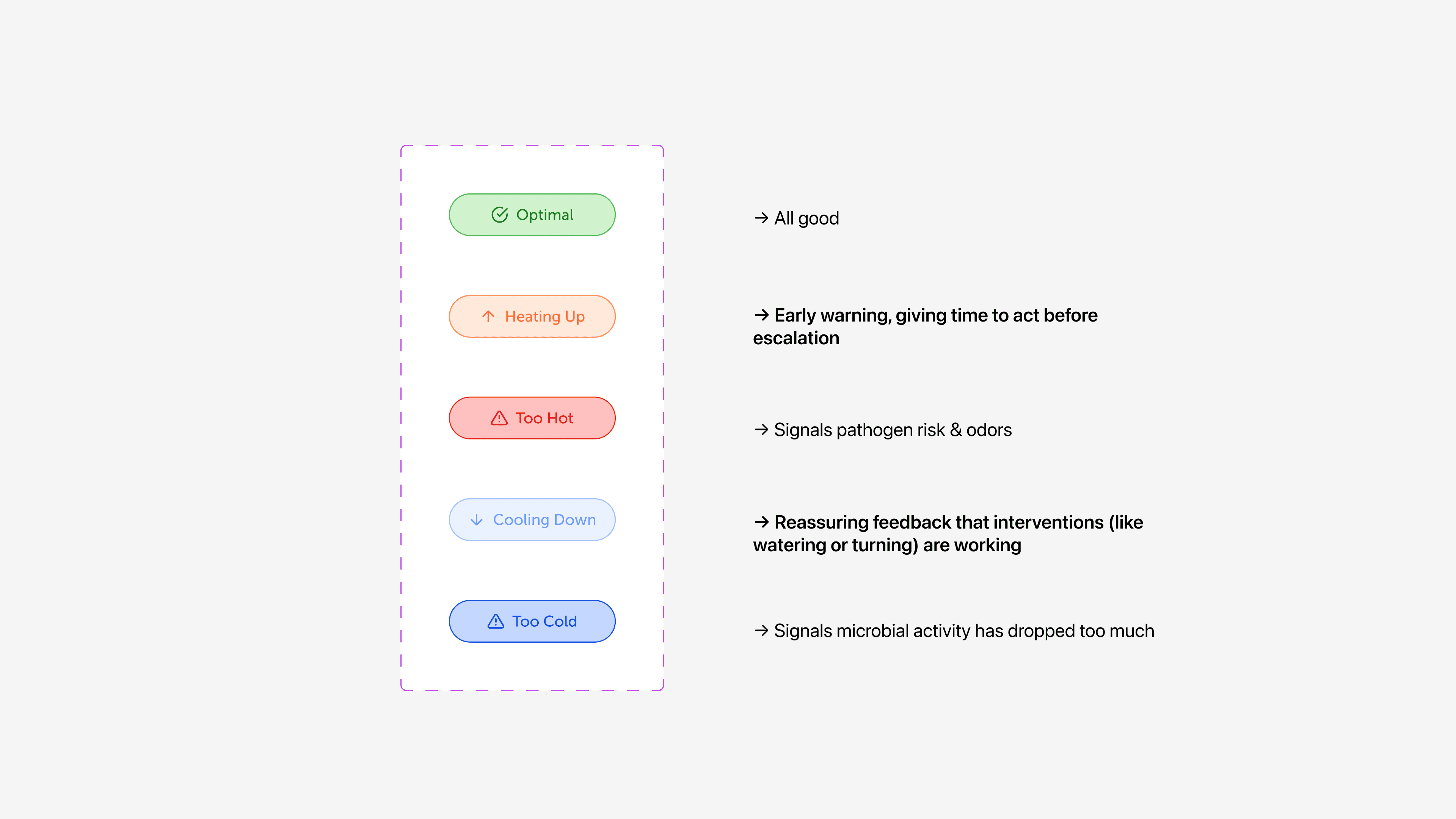
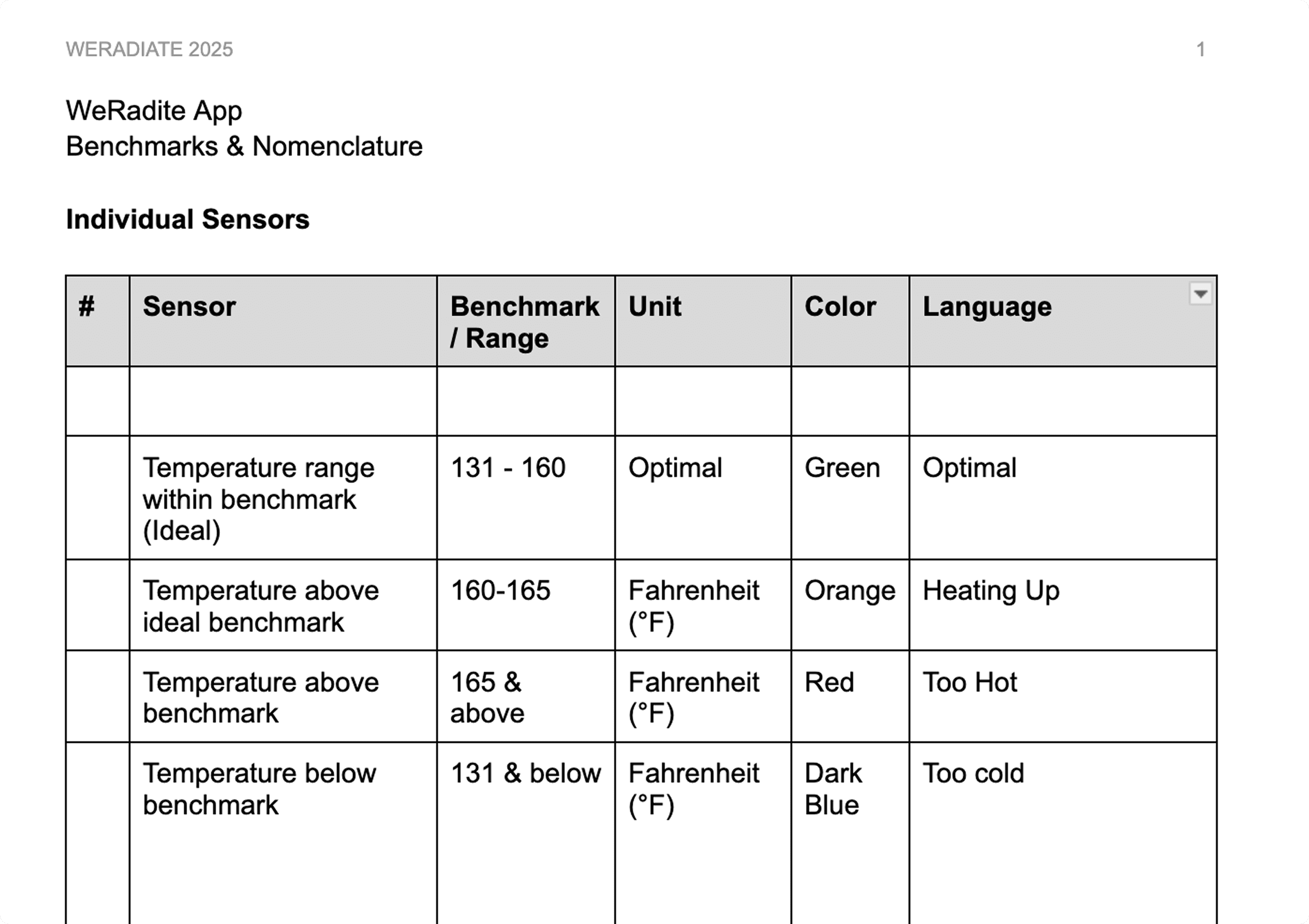
Color coded temperature tags
Color coded temperature tags
Immediate visual cues about pile health
Warning users before issues escalated and confirming when their interventions were working
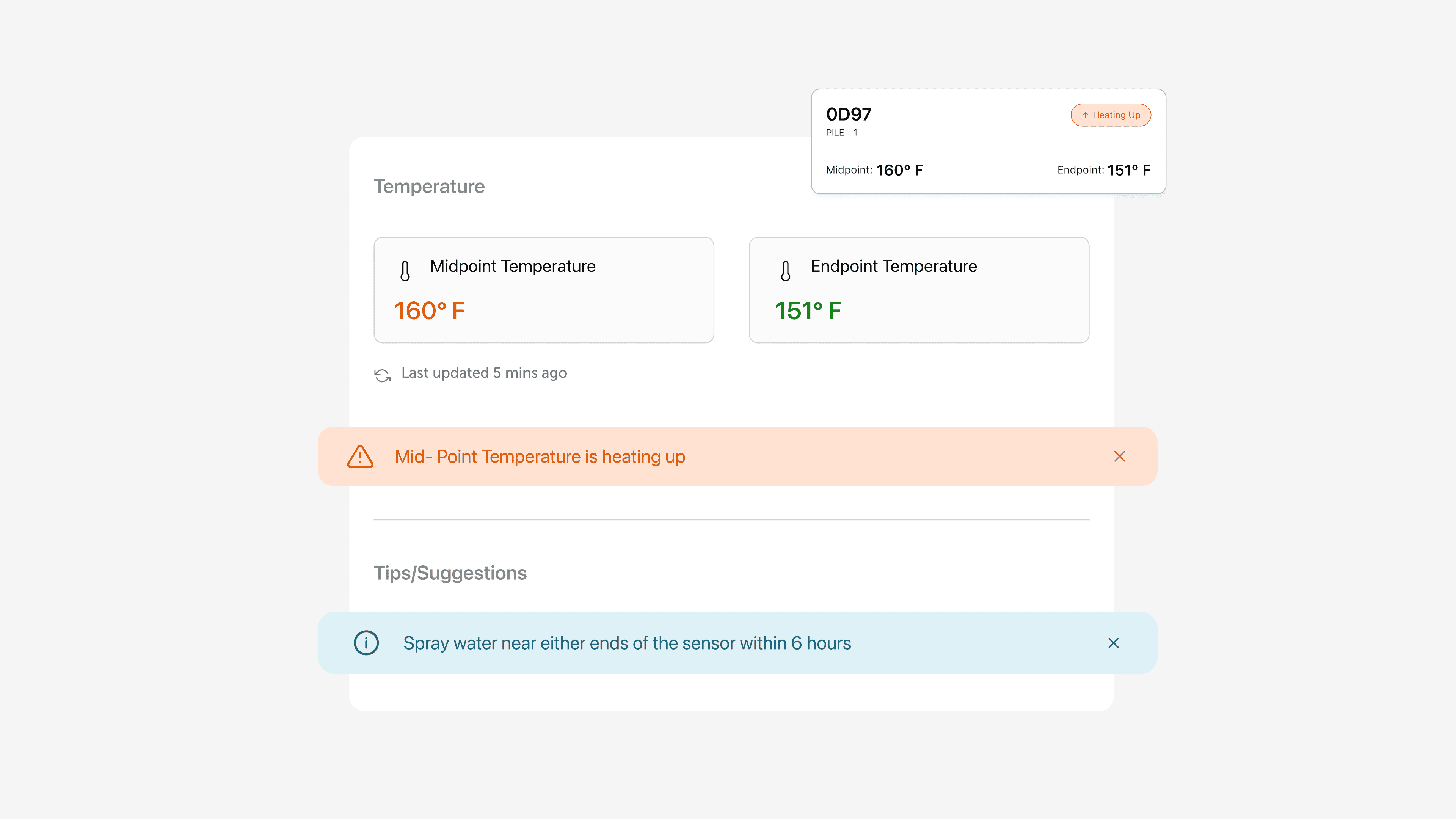
Alerts and contextual tips
Alerts and contextual tips
Guiding the users on when and how to intervene when temperatures are outside of benchmarks
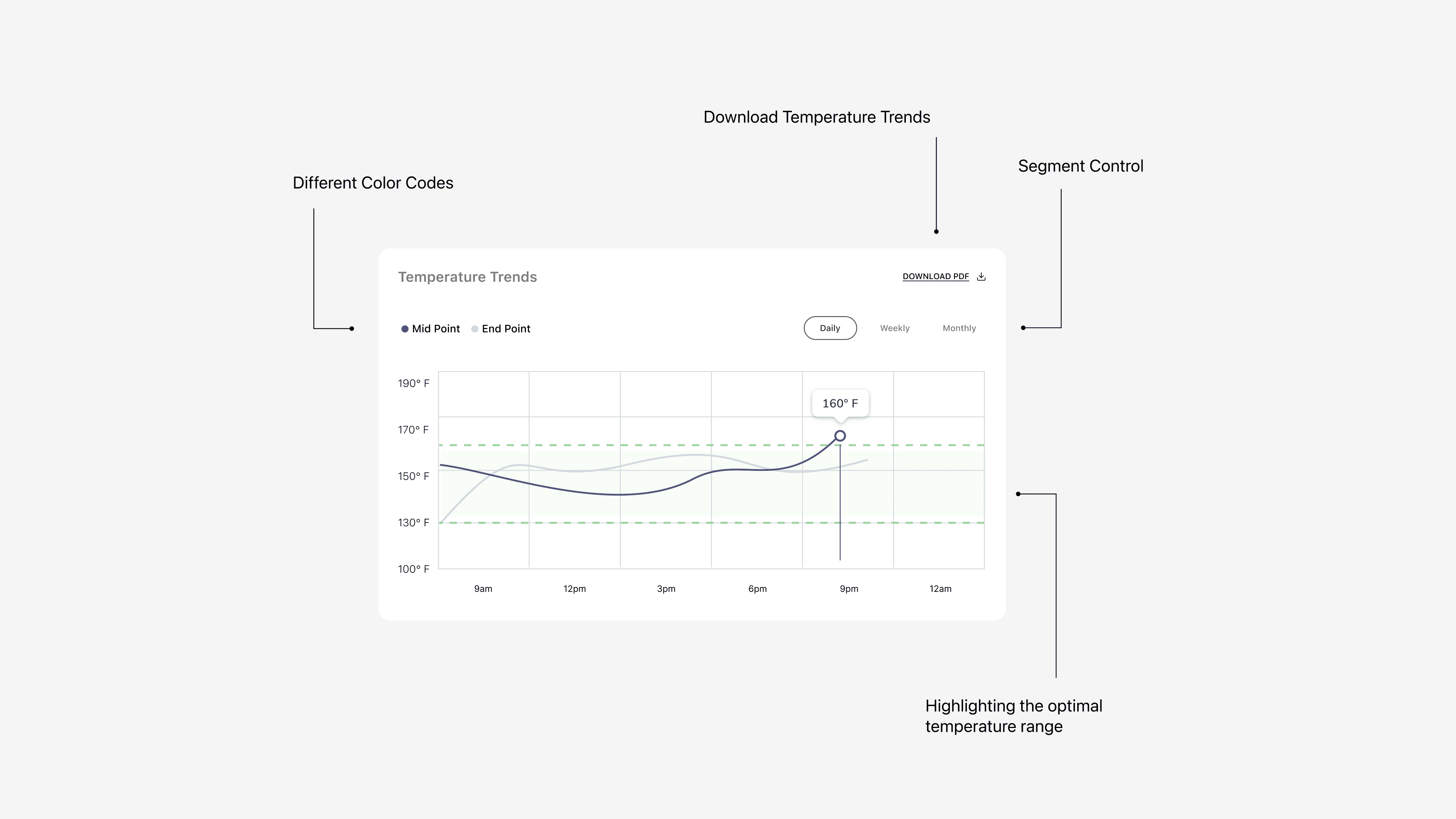
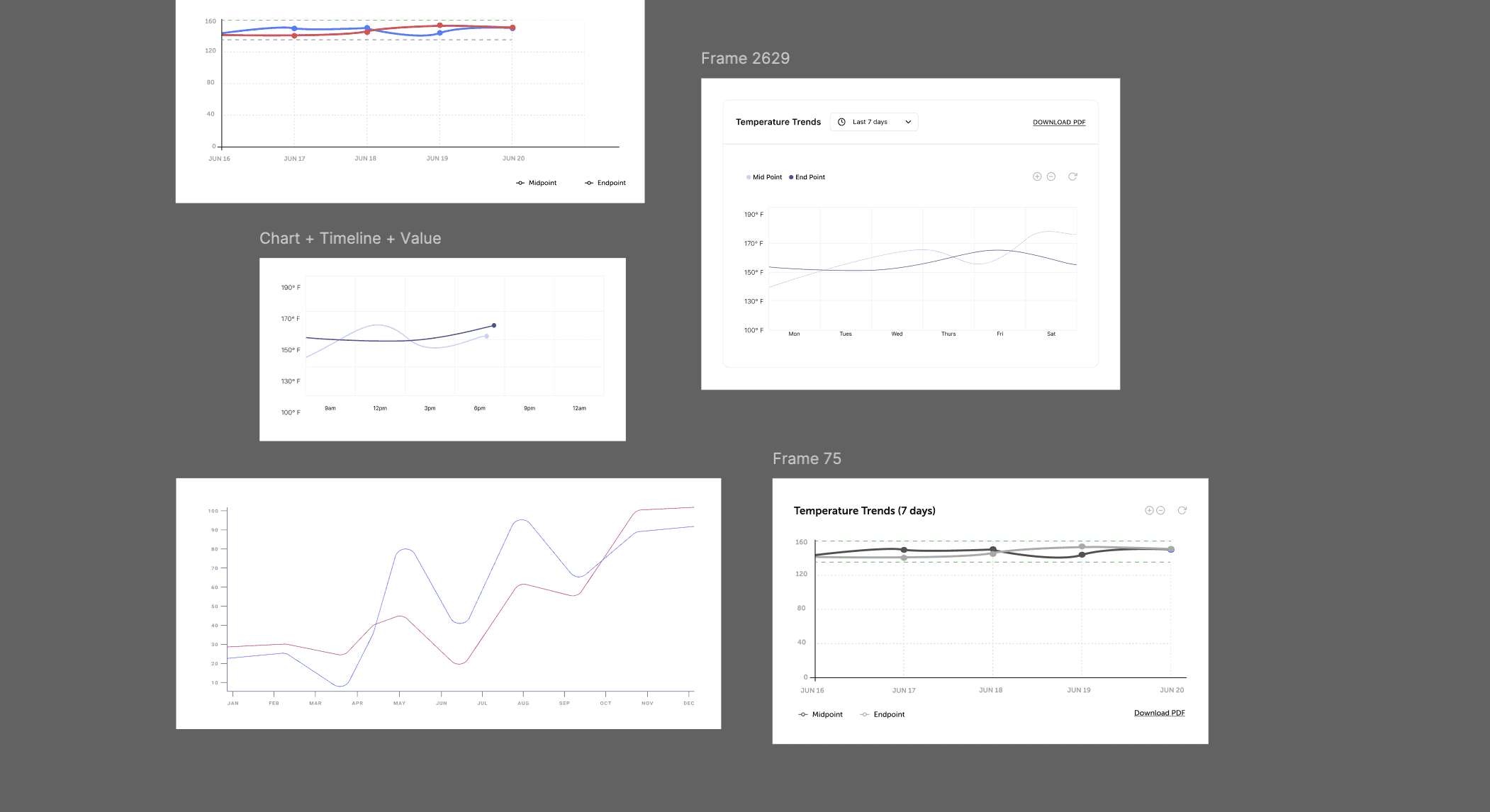
Clear Temperature Visualisation
Clear Temperature Visualisation
→ Highlighting the optimal temperature range for quick assessment
→ Introduced tones of blue for temperature lines to reduce color confusion
→ Added Daily, Weekly, and Monthly segment control for easier comparison
→ Highlighting the optimal temperature range for quick assessment
→ Introduced tones of blue for temperature lines to reduce color confusion
→ Added Daily, Weekly, and Monthly segment control for easier comparison
PROCESS
PROCESS
PROCESS
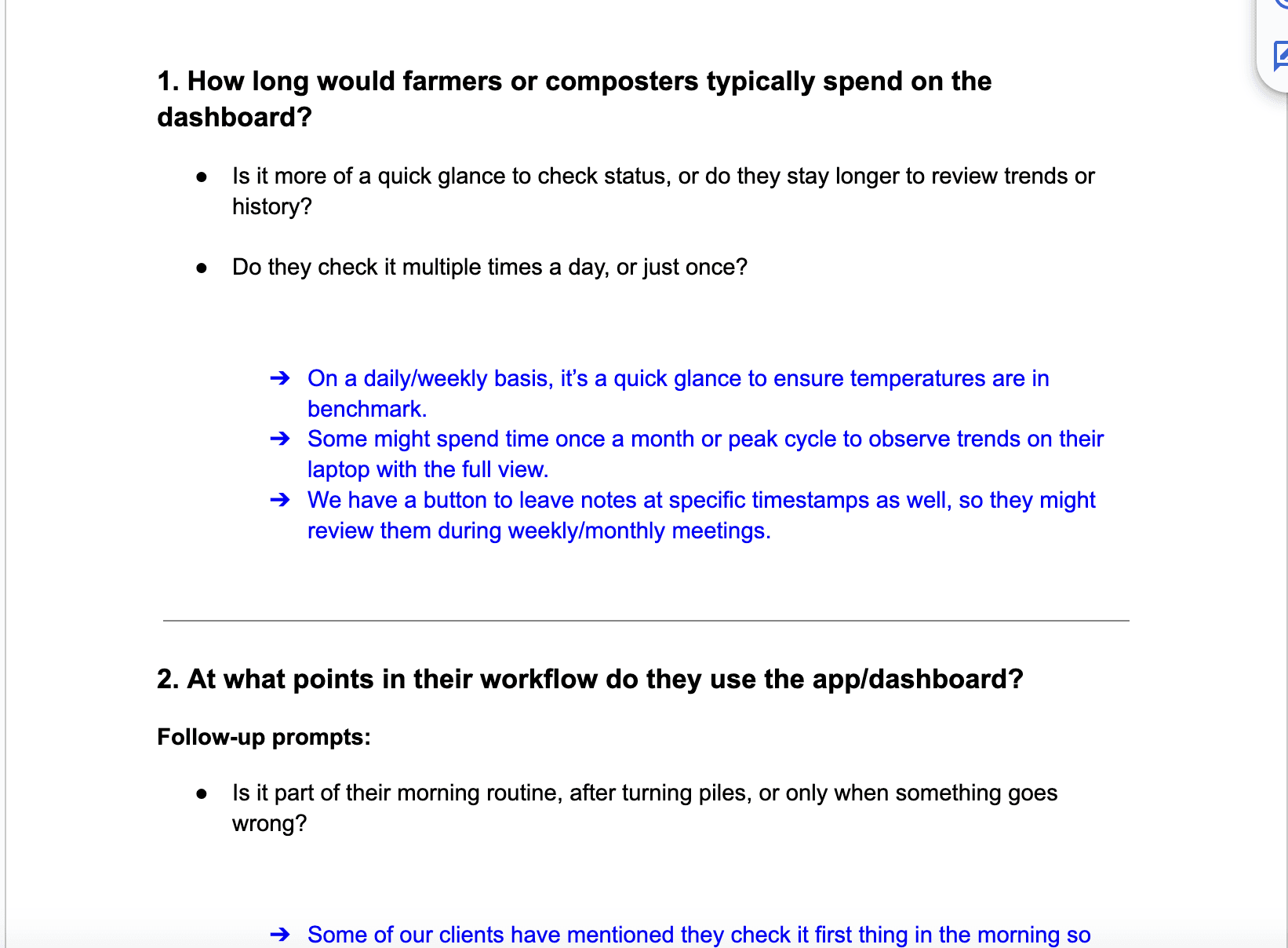
Working directly with the founders was a highly collaborative and feedback oriented process. We went through multiple wireframes, renditions and flows to narrow down on what works best
Working directly with the founders was a highly collaborative and feedback oriented process. We went through multiple wireframes, renditions and flows to narrow down on what works best
10+ Alternatives
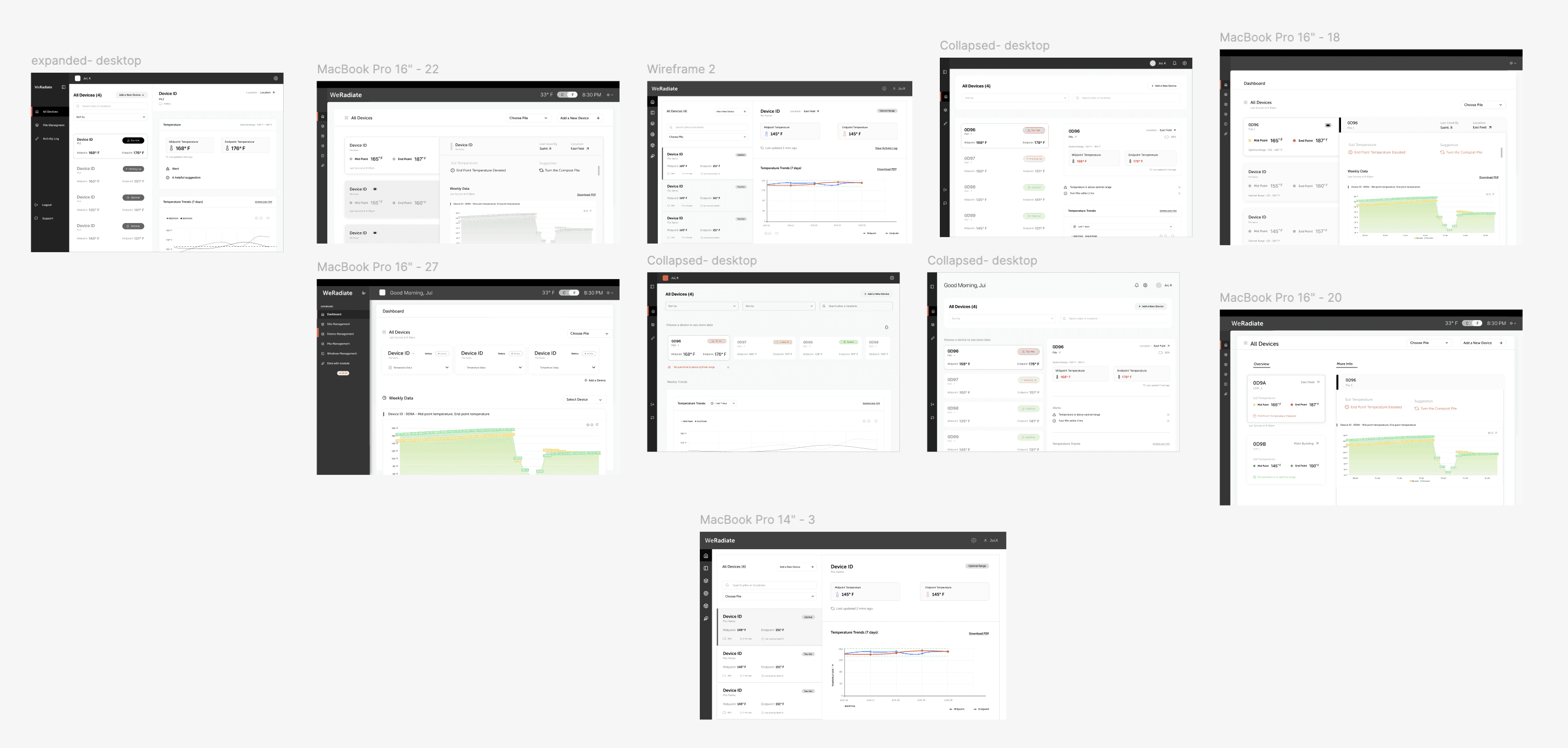
20+ Wireframes Collaboratively
(RESEARCH)
(RESEARCH)
1:1 User Interviews
Value Mapping
Usability Testing
1:1 User Interviews
Value Mapping
Usability Testing
(COLLABORATIONS)
(COLLABORATIONS)
Engineers
Soil Analysts
AI Tools (Claude)
Engineers
Soil Analysts
AI Tools (Claude)
Learnings and Takeaways
Learnings and Takeaways
Learnings and Takeaways
Embracing Ambiguity
Embracing Ambiguity
Advocating for Design Decisions
Advocating for Design Decisions
The Power of Feedback
The Power of Feedback
Back to the top
Other Projects
Other Projects
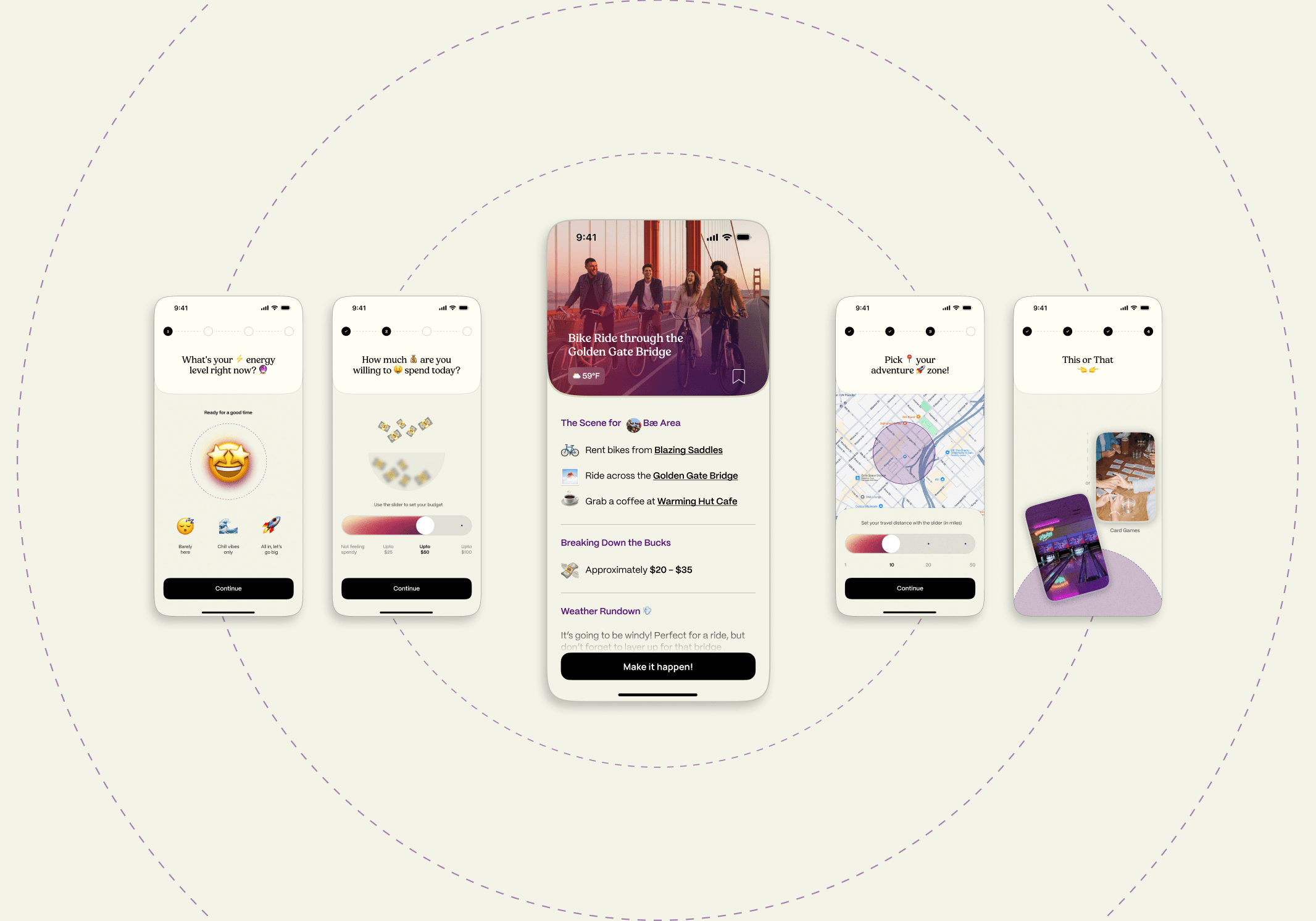
Scene - Social app that
simplifies hangout planning
Scene - Social app that
simplifies hangout planning
Scene - Social app that
simplifies hangout planning
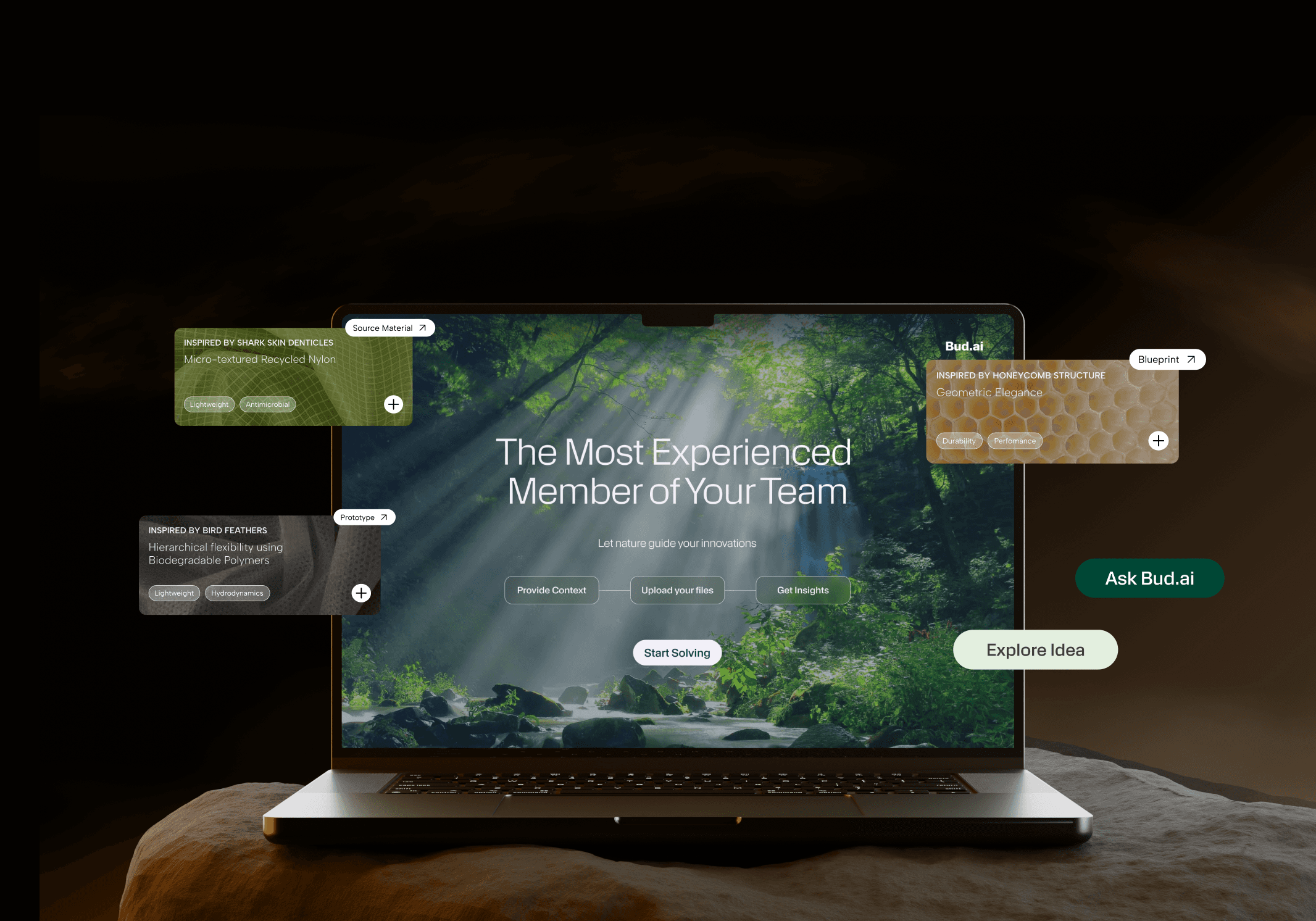
Bud.Ai - Turning nature's strategies
into actionable solutions
Bud.Ai - Turning nature's strategies
into actionable solutions
Bud.Ai - Turning nature's
strategies into actionable solutions
Let's ✧ make
something ✺
wonderful
Let's ✧ make something✺wonderful
Let's ✧ make something ✺
wonderful
PORTFOLIO 2025
PORTFOLIO 2025
Reach out to me
Reach out to me
aashnakeswani@gmail.com
aashnakeswani@gmail.com